| App Name | Kinemaster Without Watermark |
| Latest Version | v7.7.3.34536.GP |
| MOD Features | Without Watermark |
| Size | 116 MB |
| Genre | Video Players & Editors |
| Publisher | KineMaster Inc. |
| Update | Today |
How to Create Slow Motion Videos in KineMaster
Slow-motion videos are a creative way to highlight important moments, capture movement, and make ordinary footage look more interesting. Whether you are editing sports clips, travel videos, action scenes, or social media content, slow motion can add a professional touch to your projects.
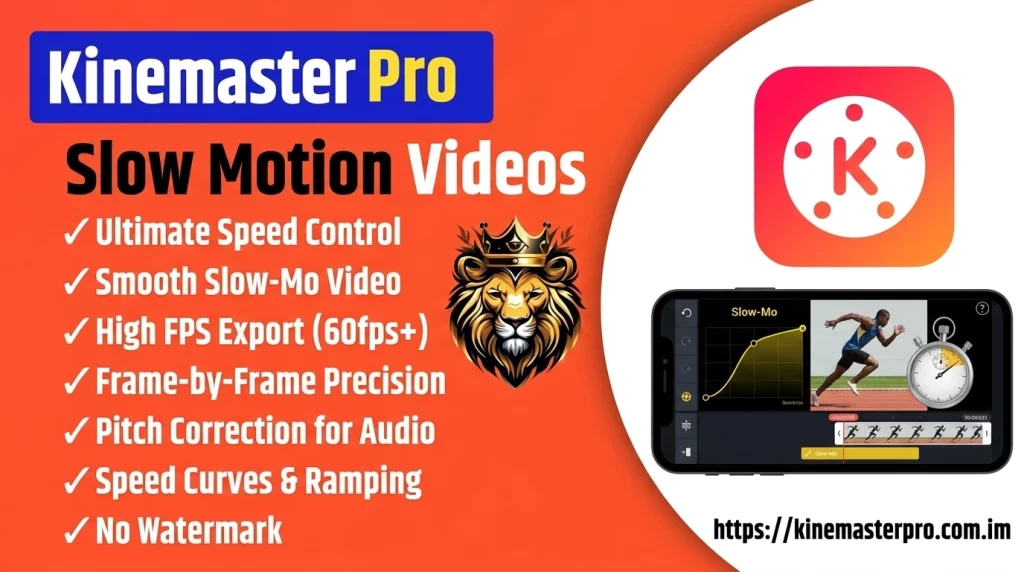
KineMaster provides speed adjustment tools that allow Android users to slow down or speed up video clips. In this guide, you will learn how to create slow-motion videos in KineMaster, choose suitable settings, and improve the final result.
What Is Slow Motion Editing?
Slow-motion editing is a video technique that makes recorded movement appear slower than its original speed. It works by displaying footage at a reduced playback rate.
For example, a person running, a ball moving through the air, or water splashing can look more dramatic when played slowly. The quality of the result depends on the original recording frame rate and the editing settings.
Main Benefits of Slow Motion in KineMaster
KineMaster’s speed control tools can help you:
- Highlight important moments in a video.
- Create dramatic action scenes.
- Show movement in greater detail.
- Make sports and gaming clips more engaging.
- Add creative effects to social media videos.
- Combine slow-motion and normal-speed scenes.
How to Create Slow Motion Videos in KineMaster
Follow these simple steps to slow down a video clip.
Open KineMaster
Launch KineMaster on your Android phone. Tap the option to create a new project and select an aspect ratio.
Choose 16:9 for standard YouTube videos or 9:16 for vertical content such as TikTok, Reels, and Shorts.
Import Your Video
Open the media browser and select the video you want to edit. Add it to the main timeline.
For smoother results, use footage recorded at a higher frame rate, such as 60 FPS or above, when available.
Select the Video Clip
Tap the video clip on the timeline. The editing options will appear on the screen.
Make sure you select the correct clip before changing its playback speed.
Open the Speed Control Tool
Find the Speed option in the editing panel. Open it to view the available playback speed settings.
The exact interface and available speed options may vary depending on your KineMaster version.
Reduce the Playback Speed
Move the speed control below the normal playback rate. A lower speed makes the video play more slowly.
For example:
- 1.0x means normal speed.
- 0.75x means slightly slower playback.
- 0.5x means half-speed playback.
- 0.25x means quarter-speed playback.
Start with a moderate adjustment and preview the result before applying stronger slow motion.
Preview Your Video
Play the edited clip and check whether the movement looks smooth. If the video appears choppy, try a less aggressive speed reduction or use footage recorded at a higher frame rate.
Add Music and Effects
You can add background music, sound effects, text, or transitions to improve your video. Choose audio that matches the mood and timing of your slow-motion scene.
Export Your Project
When you are satisfied with the result, open the export settings. Select a suitable resolution and frame rate according to your original footage and device capabilities. Save the completed video.
Best Settings for Smooth Slow Motion
The quality of slow-motion footage depends heavily on the recording frame rate.
| Original Recording | Playback Speed | Result |
| 30 FPS | 0.5x | May appear choppy |
| 60 FPS | 0.5x | Often smoother |
| 120 FPS | 0.5x | Suitable for smoother slow motion |
| 240 FPS | 0.25x | Useful for very slow movement |
These are general examples. Actual results depend on the footage, frame conversion, device, and application settings.
Tips for Better Slow Motion Videos
- Record at a higher frame rate when possible.
- Keep your camera stable while recording.
- Use good lighting to reduce motion blur.
- Avoid slowing down every part of your video.
- Combine normal-speed and slow-motion scenes.
- Choose background music that fits the scene.
- Preview the complete video before exporting.
Common Slow Motion Problems in KineMaster
Video looks choppy: The original footage may have a low frame rate. Try a smaller speed reduction.
Video becomes blurry: Check the quality of your original recording and avoid excessive digital zoom.
Audio sounds unusual: Slowing down footage can also affect its audio. Consider muting the original sound and adding suitable background music.
Export takes too long: Close unnecessary background applications and check available storage.
Slow-motion option is unavailable: Update the official application and check whether your device and version support the required editing feature.
Frequently Asked Questions
Can I create slow-motion videos in KineMaster?
Yes. KineMaster provides playback speed controls for supported video clips.
What is the best speed for slow motion?
A setting such as 0.5x is a useful starting point. The best choice depends on your original footage and desired effect.
Can I slow down a 30 FPS video?
Yes, but strong slow-motion effects may look less smooth than footage recorded at a higher frame rate.
Does slow motion affect video quality?
It can affect perceived smoothness, especially when the original recording has a low frame rate.
Can I add music to a slow-motion video?
Yes. You can add background music and sound effects to create a more engaging final video.
Conclusion
Creating slow-motion videos in KineMaster is a simple way to make your content more creative and visually interesting. By using the speed control tool, selecting suitable footage, and choosing appropriate export settings, you can highlight important moments and produce engaging videos. Experiment with different playback speeds and practice with short clips to improve your editing skills.